Why we promote women’s leadership in emergencies
Three key reasons
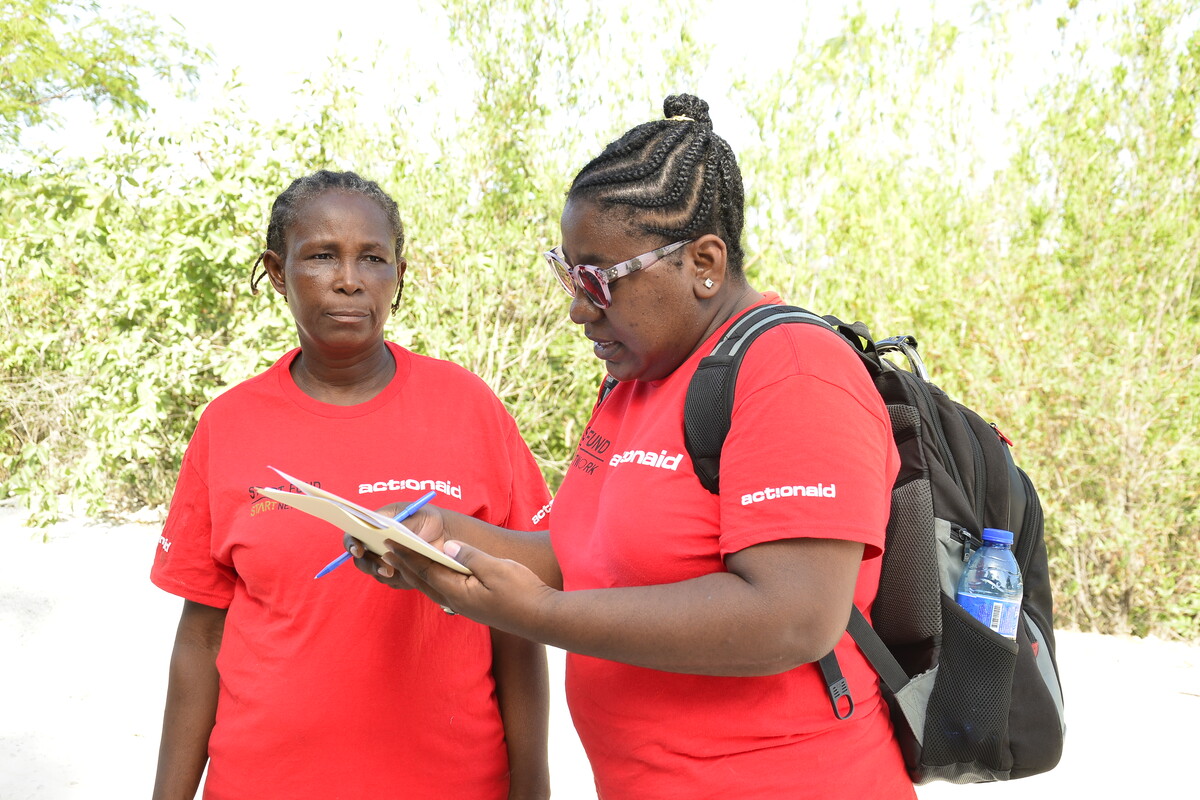
When an emergency strikes, women are often among the first to take action. They organise support networks, care for the most vulnerable and help their communities respond to the crisis. Yet they remain underrepresented in the decision-making processes that shape emergency responses.
At ActionAid, promoting women’s leadership in emergencies means helping to change this reality. We do so for three key reasons: because participating in decision-making is a right, because women’s leadership makes humanitarian responses more effective, and because strengthening women’s leadership creates lasting change that continues long after an emergency has ended.
Our experience shows that when women have the skills, opportunities and space to lead, the entire community benefits.
Participating in decision-making is a right
Women make up around half of the world’s population, yet in times of crisis they are still too often excluded from decisions that affect their lives. When their voices are not heard, their needs, priorities and rights are more likely to be overlooked at the very moment they are most at risk.
Promoting women’s leadership means recognising their right to participate actively in decisions that affect their communities and helping to build more inclusive humanitarian responses.
More effective humanitarian action
Involving women in emergency preparedness and response also leads to more effective humanitarian action.
That is why ActionAid works with women’s groups to deliver leadership training for emergencies, strengthening their knowledge, skills and capacity to take an active role before, during and after a crisis.
This approach proved its value in Haiti before Hurricane Matthew struck in 2016. Among the women who took part in the training was Nagene, the head of a nursery school and Secretary General of a women’s solidarity network in northern Haiti. When the hurricane hit her community, she immediately put her training into practice. She welcomed dozens of women into the school building where she worked, helped people find safe shelter, worked alongside the local civil protection authorities and supported the distribution of emergency relief. During these efforts, she realised that women were being only marginally involved in the distribution of aid. She decided to speak out.
“I opposed this situation. I refused the supplies they wanted to give me and stood up for the rights of the women who had been waiting in line for hours. There was a real risk that food would be distributed according to criteria that failed to protect those most in need. That is why it is so important for women to be involved in emergency response: we can help prevent violations of rights and situations of violence.”
Creating change beyond the emergency
Strengthening women’s leadership means investing in change that lasts beyond a single emergency.
When women have access to training, resources and opportunities to participate, they gain confidence in their abilities, take on leadership roles and contribute more actively to their communities.
For ActionAid, investing in women’s leadership also means challenging harmful gender stereotypes and unequal power structures. In doing so, we help build stronger, more resilient and more inclusive communities that are better equipped to face future crises together.