Democratic Republic of the Congo
Ensuring the right to education and protection.
The Democratic Republic of the Congo (DRC) is currently the scene of one of the world’s most severe, complex, and protracted humanitarian crises. Recurrent armed conflicts, widespread violence, and natural disasters are disrupting the lives of millions, triggering massive forced displacements and drastically worsening survival conditions.
More than 7 million people are internally displaced, with over 5.6 million concentrated in the eastern provinces of North Kivu, South Kivu, Ituri, and Tanganyika—areas ravaged by violence.
Approximately 26 million people—nearly a quarter of the population—are suffering from severe food insecurity, while 4.5 million children and pregnant or breastfeeding women are affected by acute malnutrition.
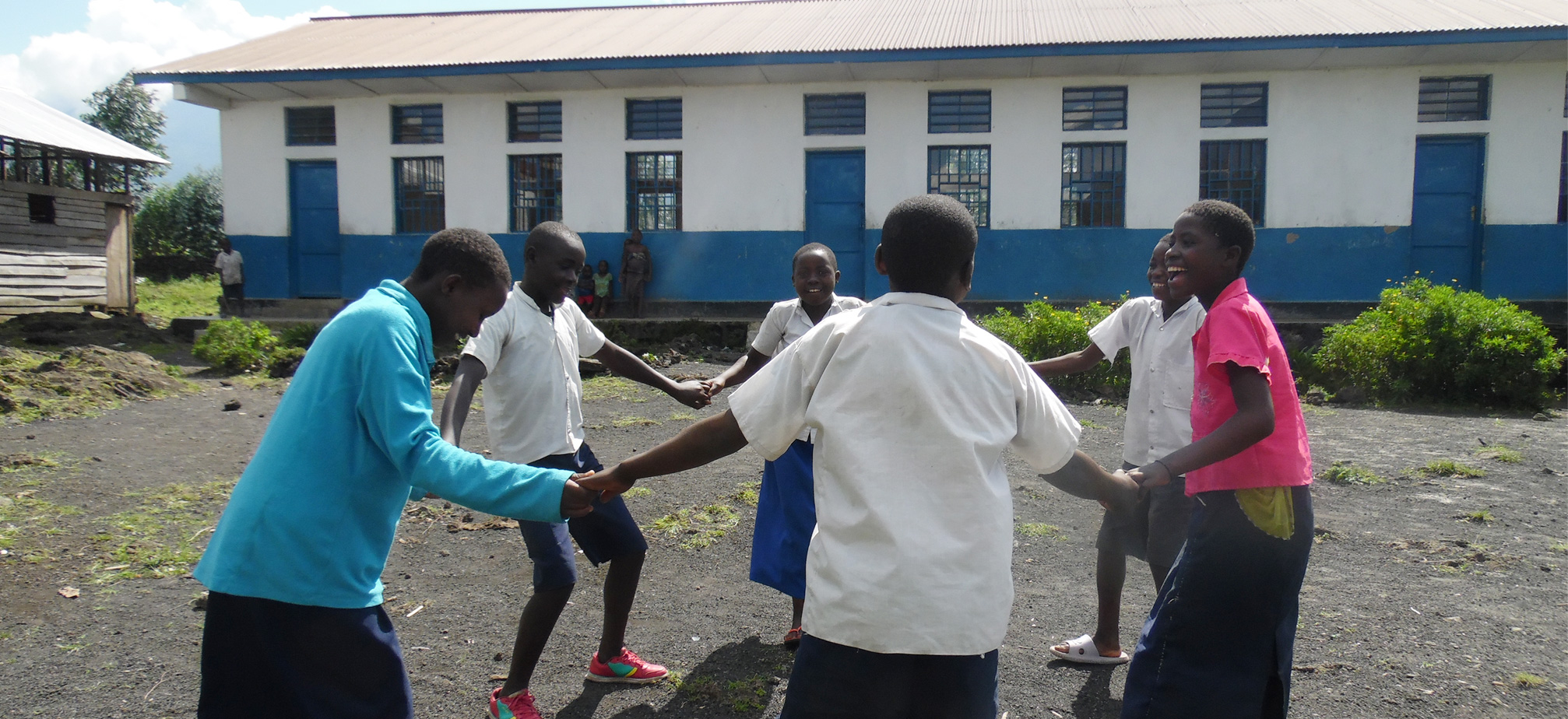
795,000 children are currently out of school due to the closure of more than 2,500 schools in the eastern provinces, many of which have been destroyed, damaged, or repurposed as shelters for displaced families.
37% of girls are married before the age of 18, and one in ten before the age of 15, severely undermining their rights to education, health, and a life free from violence.
In the context of a conflict that multiplies threats—including sexual violence, forced recruitment of minors, and attacks on schools and health facilities—access to safe education is not only a right but a vital form of protection.
ActionAid has been present in the DRC since 2003, working alongside the most affected communities in the eastern part of the country. Today, we are implementing a comprehensive protection programme in 40 communities in Maniema province (South Kivu), where thousands of displaced people live without access to basic services or humanitarian assistance.
Education is a top priority in this intervention: we aim to ensure that children have access to safe, inclusive, and quality education while also providing a protective environment that reduces the risk of abuse, early marriage, and forced recruitment.
To address the multiple barriers to education, we are working to ensure:
- the rehabilitation of school infrastructure,
- financial support for the most vulnerable families,
- training for teachers, and
- the promotion of cultural change that places girls and their rights at the centre.
Only through these efforts can we help build more resilient communities and ensure a dignified and free future for all.
If you would like to support our projects or need more information, please contact:
Claudia Vitali
Corporate, Major Donor & Philanthropy Officer ActionAid Switzerland
claudia.vitali@actionaid.org
+39 3349836820