The Land of a Thousand Hills
Projects to empower women and help them become more independent, free and strong
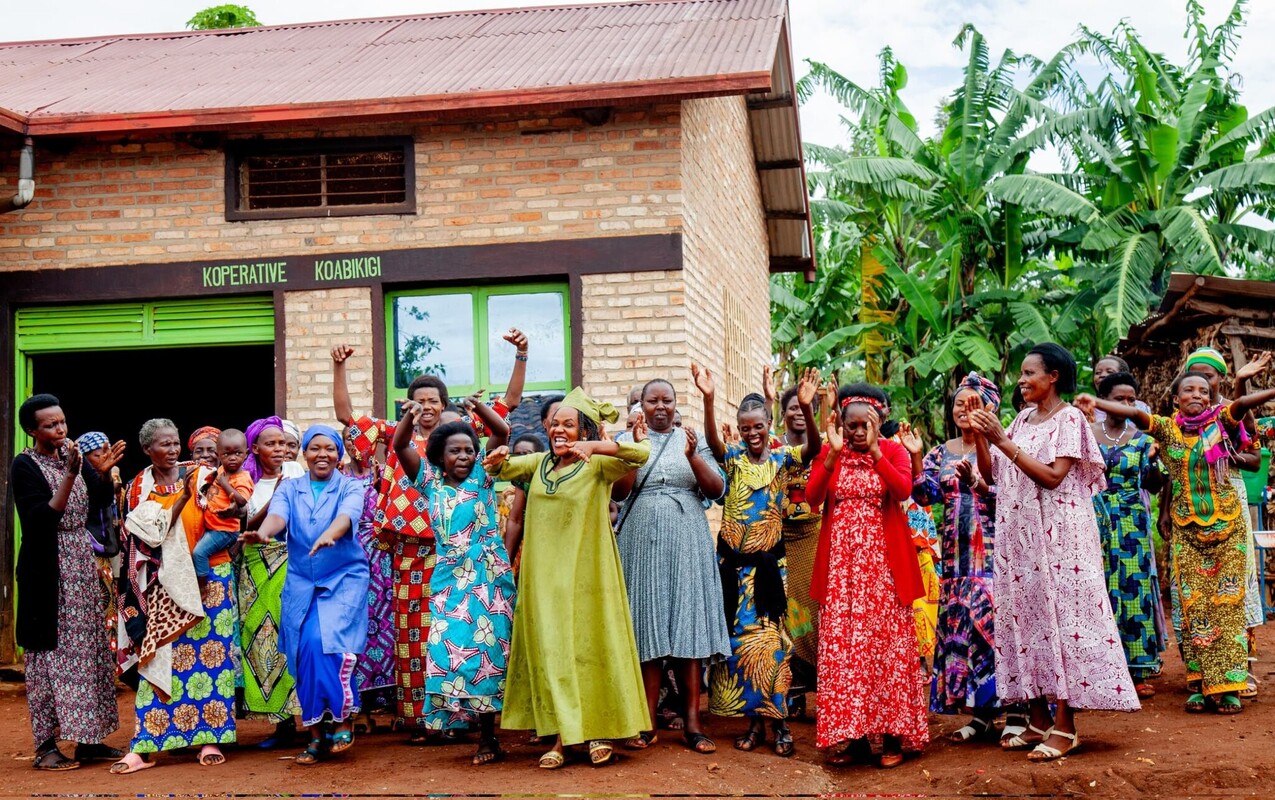
Rwanda is known as the “Land of a Thousand Hills,” a lush and verdant country in the heart of Africa. Its hills once provided refuge for displaced people and, more than 30 years ago, witnessed one of the largest mass exoduses in history, as thousands fled in an attempt to survive the genocide.
This is why Rwanda is a young country, with a median age of around 20 years, and one where women make up the majority of the population. The 1994 genocide wiped out a generation of men, leaving thousands of orphans to care for their younger siblings.
It was largely women who rebuilt the social and economic fabric that enabled the country to recover. That is why they are at the heart of our work, and why gender equality is one of our key priorities.
We believe that where women are respected, violence loses. Communities that recognize the role of women in family and community life have greater opportunities to create positive change and achieve well-being and stability.
In the Ngororero District, we are implementing several projects aimed at helping women become more independent, empowered, and resilient.
- we have built water tanks, enabling women to avoid long journeys to distant wells and reducing their risk of experiencing violence along the way.
- we have established childcare centres so that mothers can work without worrying about their children.
- we have distributed hundreds of energy-efficient stoves, reducing the need to collect fuel and easing the burden of household work.
- we have provided livestock, helping families access milk and improve agricultural productivity through the use of manure as fertilizer.
We have also supported couples facing difficulties in officially registering their marriages. Especially in rural communities, it is common for unions to exist only under traditional or religious customs, without legal recognition by the State. Legalizing a marriage has significant consequences, particularly for women, as it guarantees access to property rights, including land ownership and inheritance.
In Rwanda we have also:
- Renovated 3 early childhood development centres and built 4 new classrooms. We also constructed a basketball court, giving more than 4,600 young people a safe space to play sports and socialize.
- Trained 90 adolescent mothers on sexual and reproductive health education and women’s rights. Today, they are better equipped to protect themselves and support others who wish to report violence.
- Trained 600 people on environmental issues and disaster risk reduction.
- Built and equipped a school canteen at Nyarutove School, providing a hot meal every day to around 2,000 students, who now attend school more regularly.