Geisa and Joana: from the garden to independence
When women’s work becomes recognised and valued
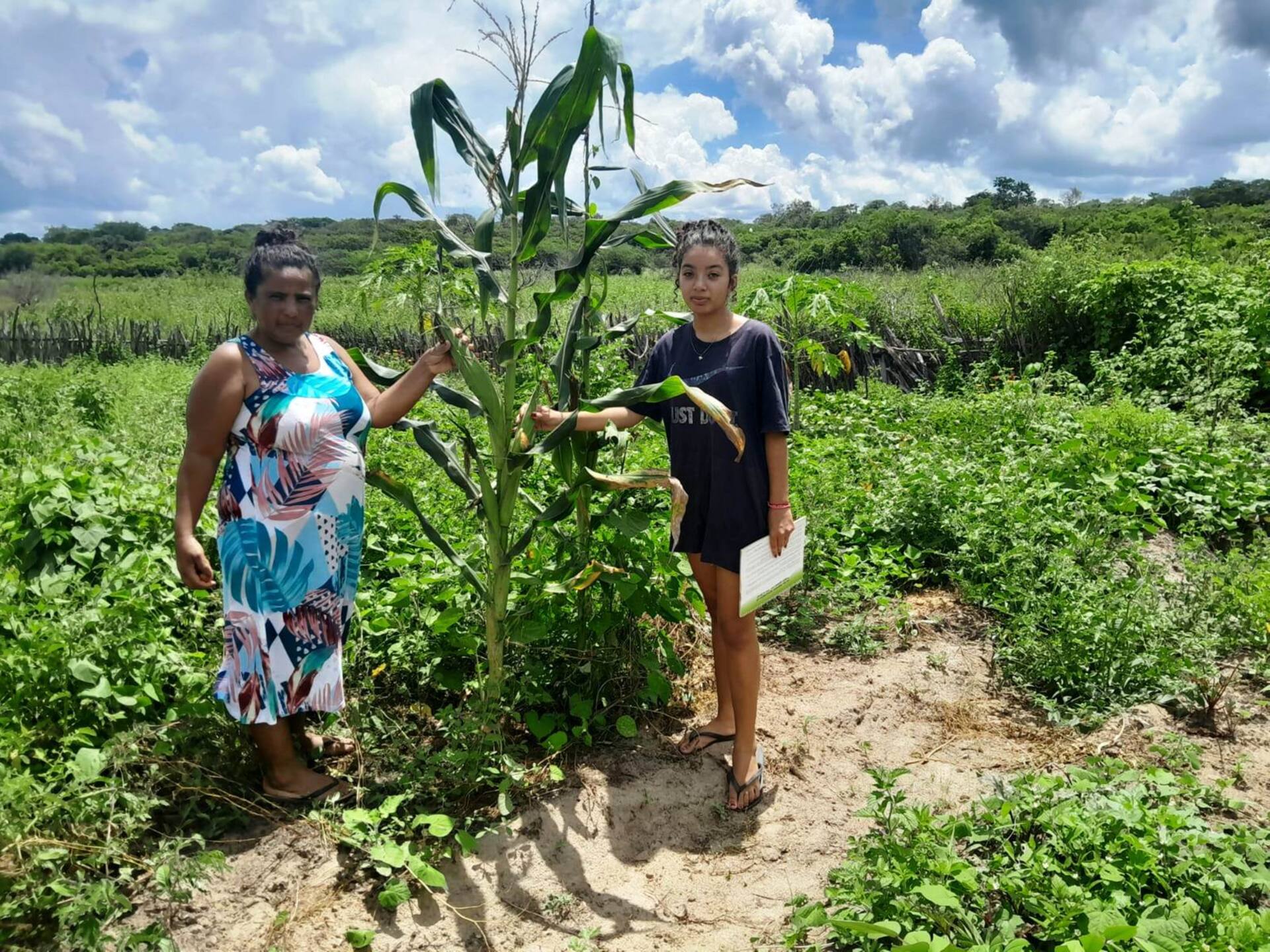
In Malhada, a rural community in Campo Alegre in Brazil, Geisa and her mother Joana grow fruit and vegetables, care for their animals, and support their family through an agroecological garden. For years, however, their daily work remained almost invisible, as is the case for many women in rural areas. They grow food, care for their families, and keep everyday life running, yet their contribution is rarely recognised.
ActionAid has been working in Brazil since 2000 and partners with SASOP (Service for Assistance to Rural Popular Organizations), an organisation that supports rural families through technical assistance, training, and practical tools to strengthen agroecology, food security, and women’s empowerment. To support women in their daily work, the Agroecological Notebooks were developed: simple record books that allow women to document what they grow, consume, exchange, and donate. They provide a practical way to make women’s work visible and demonstrate its value to both their families and their communities.
Geisa began taking part in ActionAid and SASOP’s activities when she was just 5 years old. She is now 15 and sees her community through different eyes. She has attended workshops on healthy eating, environmental protection, unpaid domestic work, gender equality, and other forms of inequality that are often overlooked at school and within families. “What I enjoyed most were the activities about domestic work,” she says. “It’s something that should be discussed much more within families, because there is still a lot of prejudice, especially among men.”
For her mother Joana, 49, change also began with the land. Thanks to training, technical support, and the use of the Agroecological Notebooks, she started looking at her daily work in a new way. She learned how to organise her production, better understand what her farm provides for her family’s table, and recognise her work as a valuable resource rather than something secondary. “Before, the situation was very difficult. Many people didn’t realise that burning the land also destroys its fertility. Nobody talked about healthy food, and harmful chemicals were widely used to fight pests.”
Today, her relationship with nature has changed. It has become more respectful, more sustainable, and more balanced. And Joana’s own life has changed with it. “After this journey, I feel like a different person. My self-confidence has grown. I no longer have to wait for my husband’s salary to buy what my children and I need.”
Geisa and Joana’s story shows what can happen when women gain access to knowledge, practical tools, and opportunities to participate. Their work becomes visible, the land is cared for more sustainably, and their families gain greater security, better health, and increased independence.
.