Our work in Mozambique
An update from the country
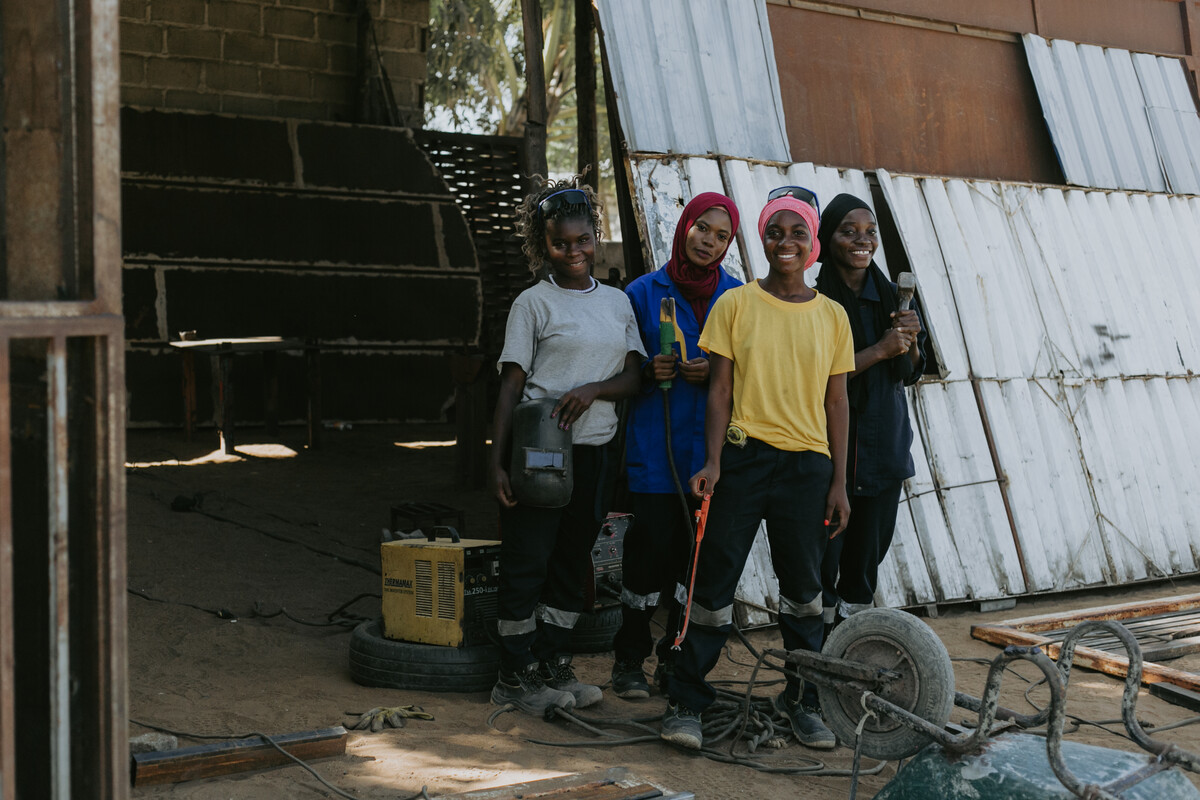
Mozambique is one of the poorest countries in the world: around 81% of the population lives in poverty. This situation has been worsened by the climate crisis, which, through recent floods and prolonged periods of drought, has damaged around 85% of agricultural land, putting the food security of millions of people at risk.
A country where women make up more than half of the population, around 40% of adults lack basic literacy skills, and 53% of girls are married before the age of 18.
In this context, ActionAid works alongside communities to strengthen food security, promote rights and support the independence of women and girls.
Community gardens
In the districts of Mocuba and Alto Molocué, we have created 13 community gardens together with local women. Maize, cassava, peas and various types of vegetables are grown here, while beekeeping helps diversify activities and sources of income.
The gardens have produced hundreds of kilos of food, partly distributed to families and partly sold in local markets. They are places where people cooperate, share knowledge and work together to build a safer future.
REFLECT Circles
Not being able to read and write can make it more difficult to manage one’s activities and defend oneself against violence and discrimination. For this reason, in the district of Alto Molocué, we support REFLECT Circles: spaces for learning and community participation, where more than 300 women are now learning to read and write.
The Circles also provide an opportunity to discuss women’s rights, gender-based violence and child marriage, helping girls understand that they can choose their own future.
Women’s clubs
In Women’s Clubs, girls and women can meet, receive training and acquire useful skills to build their own future. The activities offered include courses in sewing and tailoring, computer skills, literacy and healthy cooking.
The Clubs are also spaces for discussion, where women strengthen their self-confidence, share experiences and learn about their rights.